

The objective of the study is to carry out an inventory and analysis of Information and Communication Technologies (ICTs) likely to promote the educational inclusion of children with disabilities in HI’s countries of intervention in French-speaking Africa (Benin, Burkina Faso, Madagascar, Mali, Morocco, Niger, Senegal and Togo).

Background and objectives of the study
- Children with disabilities are among the most excluded learners in the education system. The exponential development of ICTs (Information and Communication Technologies) throughout the world is a real opportunity to improve the educational inclusion of these children.
- The aim of the study was to: i) identify existing ICTs that can support the educational inclusion of children with disabilities; ii) identify the challenges to the implementation of these ICTs in the classroom in some of Handicap International’s French-speaking countries of intervention, namely Benin, Burkina Faso, Madagascar, Mali, Morocco, Niger, Senegal and Togo. The study consists of two separate documents: this report outlining the methodology of the study, the process for the development of the ICT Directory, and the main lessons learned, on the one hand, and a document listing the ICTs identified during the research, on the other hand.
- The study was based on secondary research, interviews with experts and with potential users of the ICTs in the intervention countries, namely teachers, parents and students with disabilities in Benin, Niger and Senegal.
Main findings
- While ICT has an important potential to promote the inclusion of children with disabilities in education, it cannot remove all barriers (non-adapted facilities, discrimination against children with disabilities, etc.). The use of ICT in inclusive education programmes therefore complements other actions aimed at removing these barriers.
- ICT can help to make schools more inclusive and enable them to play their role to the full, which is to impart knowledge, skills and attitudes to all students without distinction. To achieve this, the school must make the content and activities it offers accessible to all students, i.e. enable everyone to communicate with the teacher, communicate with other students, access written material, access oral material, express themselves in writing, express themselves orally, take notes to memorise their lessons, and access various teaching tools/information.
- Educational content and activities in schools can be divided into three main categories:i) Mainstream educational content and activities, which have not been designed taking into account specific difficulties that some children may have;ii) Accessible educational content and activities, which have been designed for all and are therefore accessible to all children with and without disabilities;iii) Specialised educational content and activities, which are specifically aimed at children with disabilities who encounter a certain type of difficulty.
- ICT provides teachers with all kinds of educational content and activities and makes them accessible to all their students. ICTs can be classified into three main categories:
- i) The educational content and activities in themselves, i.e. digital media used to deliver lessons and impart knowledge/skills to the learner (an audiobook, an educational video with sign language interpretation, etc.);ii) Hardware that is used to make certain educational content/activities accessible (e.g. a computer for viewing the sign language interpretation of an audio document);iii) Accessibility features that make hardware accessible to all (e.g. a screen reader that allows a blind or visually impaired student to use a computer to access content on the internet).
- Despite their potential to foster inclusive learning, the use of ICT in schools in the intervention countries faces a number of barriers such as unsuitable school facilities (lack of access to electricity and internet, lack of secure space to store the ICT in the school, etc.), lack of quality equipment (computers and software that are not suitable and are not updated, lack of furniture adapted to the use of computer equipment in classrooms, etc.), limited computer skills of teachers and students, lack of medical support (occupational therapists) to maximise the impact of the ICT on children’s inclusion in school, lack of clear consensus on the use of ICT in schools, lack of clear guidelines for the lending and maintenance of ICTs in schools, lack of will, resources and a clear vision for ICT and inclusive education at government level, etc.
- Despite these challenges, ICT has a real potential to support the educational inclusion of children with disabilities. Some of the recommendations for improving ICT adoption in inclusive schools include providing the schools with electricity (off-grid solar energy can be considered), providing an internet connection (mobile internet, for example), providing relevant and quality computer hardware and software (giving priority to the acquisition of equipment adapted to the project rather than relying on donations), computer training for teachers and children, support of medical professionals for the implementation of ICT in schools (video exchanges between teachers and experts, for instance), organisation of general meetings to define best practices for the use of ICT in inclusive schools, signing of clear documents defining the roles and responsibilities of all the players involved in an ICT project, particularly with regard to equipment maintenance, integrating the use of ICT for inclusive education into national education strategies, and advocacy with major tech players to encourage them to commit to the use of ICT for inclusive education.

Related knowledge products
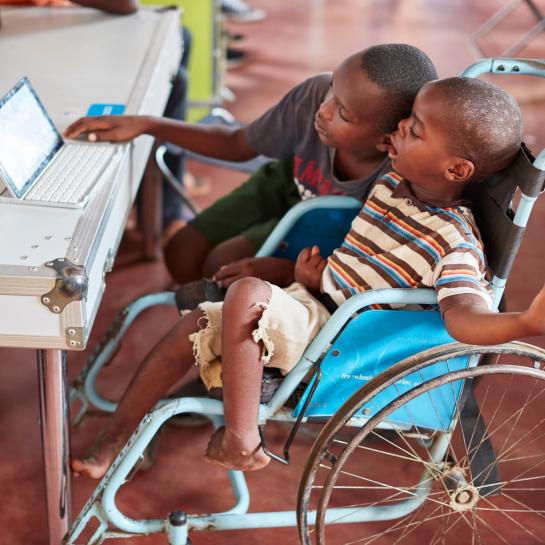
Information and Communication Technology supporting the inclusion of children with disabilities in education
This factsheet draws on a study carried out by Humanity & Inclusion (HI) with the support of the AFD (Agence française de développement) and Norad (Norwegian Agency for Development Cooperation) aimed at (i) drawing up an inventory of existing ICT that could help support inclusive education for children with disabilities; and ii) identifying the challenges involved in implementing these ICT tools in the classrooms of some of the French-speaking countries in which HI is working, namely Benin, Burkina Faso, Madagascar, Mali, Morocco, Niger, Senegal and Togo.
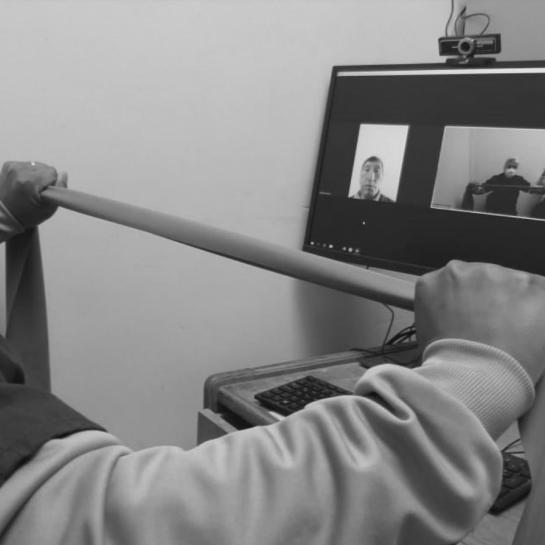
Barriers and levers for the use of telerehabilitation through experimentation in three countries
The aim of this study is to describe and analyse the barriers and levers for the us eof ICT to provide rehabilitation services to people remotely in their environment.


Add new comment